


Athletic Trainer Life Cycle
Certification Renewal Requirements
To renew, Athletic Trainers must complete Continuing Professional Certification (CPC) Renewal or Legacy Renewal requirements, which include completion of:
- Pathfinder (CPC Renewal ONLY)
- Continuing education
- Continuous emergency cardiac care certification
- Annual renewal fee
- Compliance with BOC Standards of Professional Practice
CPC Renewal and Legacy Renewal promote continued competence and contain familiar requirements. CPC Renewal goes a step further by using Pathfinder to engage ATs with their life-long learning to create a more meaningful professional development experience.
There is no cost to use the BOC’s online CE reporting system. There is a $25 processing fee to submit CEUs using a paper CE reporting sheet.
View Certification Renewal Handbook for Period Ending 1/31/28
View 2024-2025 Certification Maintenance Requirements


Practice Analysis
The purpose of the BOC certification program is to establish that individuals have the knowledge and skills necessary to perform tasks critical for the safe and competent practice as an entry-level Athletic Trainer through the exam and continuing competence requirements. The BOC Practice Analysis identifies essential knowledge and skills for the athletic training profession and serves as a blueprint for exam development and continuing competence programming.
Get Your Copy
By purchasing a document from the BOC Store, you indicate your understanding of the product being purchased. The PA is an electronic file that will be available for download immediately upon completion of online payment. Purchasers must download and save the file using the link provided on the order completion page, as the document will not be sent via email or mail.
Practice Analysis, 8th Edition (PA8)
Full Version: $18.95 (non-refundable)
Purchase PA8
BOC Exam: PA8 is effective for BOC exams beginning March/April 2023.
Certification Maintenance: PA8 is effective for continuing education beginning January 1, 2024.
Free PA8 Documents:
The accompanying PA8 documents are available for download at no cost:
Download Content Outline for PA8
Download Comparison of PA8 to PA7
Download How to Use PA8
Download Crosswalk Comparing PA8 and CAATE 2020 Standards
State Regulation
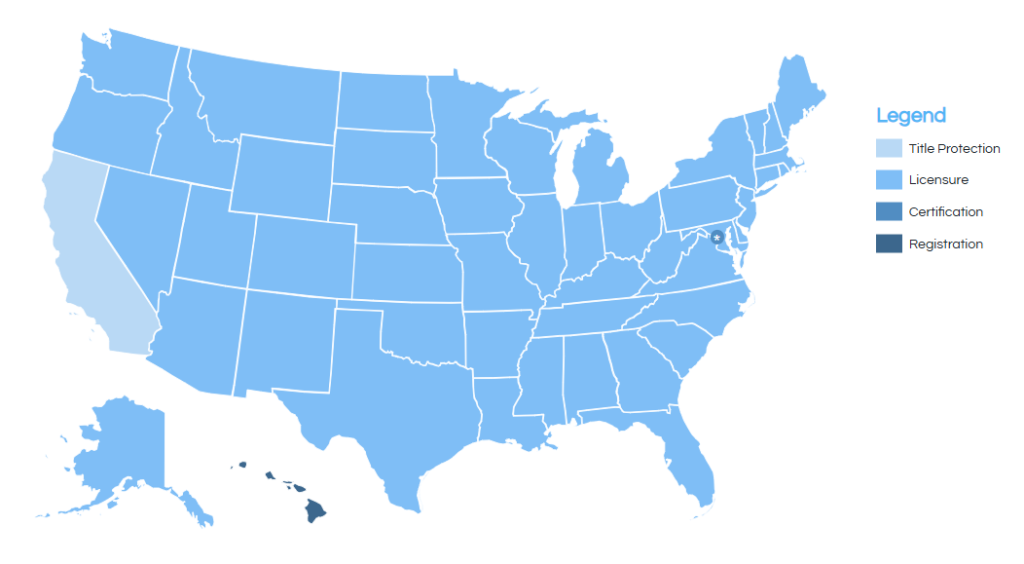
Currently, 49 states and the District of Columbia regulate the practice of athletic training. Individuals must be legally recognized by the appropriate state regulatory agency prior to practicing athletic training. The BOC exam is recognized by all Athletic Trainer state regulatory agencies to meet their exam requirement. Compliance with state regulatory requirements is mandatory and the only avenue to legal athletic training practice.
Go to Interactive State Regulation Map
Certification Verification
Official Verification
Official verification of current athletic training certification status can be ordered for state licensure or employment purposes. Certification verifications are processed and sent instantly upon submission. ATs can confirm the status of their verification through the order page to see if the recipient has viewed the verification. Please contact the BOC if you or the recipient are having any issues with the verification.
There is a $30 processing fee.
Please note that verification is sent directly to the state regulatory agency or the employer.
Order Certification Verification
Basic Online Verification
Anyone may request verification of an AT’s certification. If official verification is not needed, search the online registry.
Search Online Registry
Status Definitions
The following status definitions are effective as of January 1, 2012 per the BOC Professional Practice and Discipline Guidelines and Procedures.
Certified
Certification is in good standing. Individuals may practice as authorized by the BOC.
Expired
Certification is voluntarily resigned for reasons unrelated to disciplinary proceedings. ATs with an Expired status may not represent themselves as Certified Athletic Trainers or Board-Certified Specialists or use the ATC® or BCS-O certification marks.
Certification is forfeited due to non-compliance with BOC certification fee and/or continuing education requirements. Respondents with an Expired status may not represent themselves as Certified Athletic Trainers, Board-Certified Specialists or use the ATC® or BCS-O certification marks.
Suspended
Certification is not in good standing as a result of the imposition of a disciplinary action or the BOC chief executive officer’s decision that there is cause to believe that a threat of immediate and irreparable injury to the health of the public exists. Respondents with a Suspended status may not represent themselves as a Certified Athletic Trainer, Board-Certified Specialist or use the ATC® or BCS-O certification marks.
The Disciplinary Action Exchange (DAE) was developed to help the BOC, states and consumers locate disciplinary actions in an efficient manner.
Launch DAE
Resign Certification
BOC Certified Athletic Trainers (ATs) may resign certification by completing “AT299 – Retirement/Resignation Request” in their BOC profile. Resignation means the AT has retired or discontinued practice as an AT. The individual’s status will be listed as “Expired” instantly upon submission of the form. The appropriate state agencies and NATA will be notified when an AT resigns.
Please review the information below to see if resigning certification is the right choice for you.
- A BOC Certified AT who wishes to resign certification and have their status changed from Certified to Expired must notify the BOC by completing “AT299 – Retirement/Resignation Request” in their BOC profile.
- The status of Certified is defined “as certification in good standing; individuals may practice as authorized by the BOC
- “The status of Expired is defined “as certification voluntarily resigned for reasons unrelated to disciplinary proceedings”
- The state Athletic Trainer regulatory agency where you reside will be notified of the change in your certification status
- The NATA will be notified of the change in your certification status
- If you currently serve as a supervisor to students in an athletic training education program, please check with the program director to determine your supervisor/preceptor eligibility per CAATE requirements
- You will agree to discontinue:
-
- Representing yourself to the public as a practicing BOC Certified Athletic Trainer or Board-Certified Specialist
- Using the certification marks ATC® or BCS-O following your name*
- Serving as an exam item writer for any BOC exam
- Serving as a supervisor or preceptor of students who are satisfying the athletic training requirements for certification eligibility
*The designation “AT Ret.” may be used to indicate that an individual was once a BOC Certified Athletic Trainer.
Submit Retirement/Resignation Request
Reinstate Certification
Any expired Athletic Trainer (AT), in good standing, can reinstate their certification. Eligibility for reinstatement and requirements change based on the number of renewal periods missed. A renewal period is the two-year period in which the AT owes continuing education (CE) and/or Continuing Professional Certification (CPC) requirements and fees.
A common scenario applying the reinstatement policy:
An AT fails to submit one or more of their renewal requirements (CE or fees) by the renewal period deadline; therefore, their certification expires. That AT is now considered to have missed one renewal period and may now Reinstate by CE (submitting 50 CEUs to satisfy the missing CE requirement dates as listed on their BOC profile). Once reinstated, the AT must then submit all renewal requirements (CEUs and fees) for the current period. Failure to complete reinstatement requirements by the next renewal period deadline means the AT has missed two renewal periods and is now only eligible to reinstate by passing the BOC exam.
Please see the steps and requirements below based on your situation:
If Expired for Less than Two CE Renewal Periods
Option 1: Reinstate by CE
- Complete the application and pay the non-refundable application fee of $175 by December 1st of the odd-numbered years
- Reinstatement requirements are due by the end of the reporting period.
Tip: Submission of the reinstatement form by Dec 1 allows for processing and necessary changes to be made prior to the deadline. Applications submitted after Dec. 1 of the odd-numbered reporting year will only be reviewed once and will not be sent back for adjustments. - Provide documentation for the required number of CEUs
- These can be earned within the missed renewal period through your submission date (you can NOT use these CEUs again for the period you are reinstating into)
- Provide proof of current certification in emergency cardiac care (ECC)
To begin the reinstatement process, log in, select your reinstatement path and complete the application. Reinstatement by CE applications will be reviewed within 2-4 weeks.
Please note that CEUs reported on the reinstatement application are intended to satisfy CE requirements missed in prior renewal period(s). Upon reinstatement, ATs are still responsible for meeting all certification renewal requirements during the renewal period in which they are reinstated.
- ATs reinstated by July 31 within the first year of a renewal period will automatically be placed in CPC Renewal.
- ATs reinstated after July 31 of the first year of a renewal period will automatically be placed in Legacy Renewal.
Option 2: Reinstate by Exam
- Complete the application and pay the non-refundable application fee of $100
- Successfully pass the BOC exam: $375
- Provide proof of current certification in ECC
Please Note: Once you have selected Option 2 and have taken the BOC exam, Option 1 is no longer an option for reinstatement. If you select Option 2, you must pass the BOC exam to be reinstated.
Upon reinstatement, ATs are still responsible for meeting all certification renewal requirements during the renewal period in which they are reinstated. ATs who Reinstate by Exam will be required to complete CPC Renewal as their certification renewal requirements.
To begin the reinstatement process, log in, select your reinstatement path and complete the application.
If Expired for Two or More CE Renewal Periods
Option 1: Reinstate Exam
- Complete the application and pay the non-refundable application fee of $100
- Successfully pass the BOC exam: $375
- Provide proof of current certification in ECC
To begin the reinstatement process, log in and complete AT303: Reinstatement by Exam Application.
Upon reinstatement, ATs are still responsible for meeting all certification renewal requirements during the renewal period in which they are reinstated. ATs who Reinstate by Exam will be required to complete CPC Renewal as their certification renewal requirements.
To verify your requirements and due date(s), log into your BOC profile.
CPC Renewal
Continuing Professional Certification (CPC) Renewal is an ongoing, individualized process developed by and for ATs that ensures athletic trainers remain competent, up-to-date, and accountable for their professional growth. Implemented through the Pathfinder platform, CPC empowers ATs to take ownership of their longitudinal learning by setting goals, reflecting on practice, and selecting continuing education activities that best advance their growth across diverse practice settings.
CPC renewal requirements vary based on the year of initial certification. The tables below outline the Pathfinder segment and renewal requirements:
| Certified Prior to 2026 – CPC Renewal Requirements |
Pathfinder Completion
|
40 CEUs Due
|
| Certified in 2026 – CPC Renewal Requirements (Mandatory) |
Pathfinder Completion
|
20 CEUs Due
|
Remediation for ATs Certified 2026 and Later
ATs certified in 2026 or later who fail to remain current with CPC Renewal requirements (falling behind two or more segments) will have an opportunity to complete CPC Renewal through remediation before January 31, 2028. Remediation includes:
- Completion of all four My Challenge Questions (MCQ) segments in addition to any other incomplete CPC Renewal requirements
- Compliance with a mandatory CE audit after the renewal period
- Will be subject to disciplinary action by the BOC Professional Practice and Discipline Committee.
Failure to meet remediation requirements within the specified timeframe will result in expiration of your certification and compliance with reactivation and/or reinstatement policy and procedures to return to an active status.
Pathfinder
Pathfinder is an interactive professional development platform/tool that helps ATs map out their growth. It provides a personalized dashboard where ATs set goals, challenge themselves with evidence-based questions in segments throughout the renewal period, and explore recommended learning opportunities. Pathfinder makes professional development interactive, more engaging, timesaving and aligned with each AT’s goals.
Quick Start Guide Video
My Learning Path
Quick Start Reference Resource
CPC/Pathfinder FAQ
Continuing Education – Certification Renewal
CPC Renewal builds on current requirements by using Pathfinder to further engage ATs with their life-long learning to create a more meaningful professional development experience. Learn more below.
ATs must complete a predetermined number of continuing education units (CEUs) during the certification maintenance period. The current period ends January 31, 2028.
View Certification Renewal Handbook for Period Ending 1/31/28
Category A
Category A programs are available through BOC Approved Providers. If you’re interested in live events, think about attending workshops, seminars, conferences, webinars, or other events. If you prefer taking CE programs in the comfort of your own home or while on the road, there are home study programs available for your convenience.
Requirements
| CPC Renewal | |
| Minimum | 10 CEUs if 40 CEUs due
5 CEUs if 20 CEUs due |
| Maximum | None |
| POSSIBLE ACTIVITIES | NUMBER OF CEUs |
| Synchronous or asynchronous and delivered in a variety of methods (i.e., webinars, podcasts, multi-media, conferences) | As awarded by provider |
| Post-certification coursework from a CAATE accredited athletic training post professional program | 10 CEUs per credit hour |
| Graduate of a post-professional degree (e.g., PhD, EdD, DSc, DAT) may qualify if the scholarly product (e.g. dissertation, research project) has a narrow focus of athletic training3 | 10 CEUs if 40 CEUs required 5 CEUs if 20 CEUs required |
| Program faculty/speaker or author of Category A program (speaking engagements can be counted once per topic) | Primary1=10 CEUs per topic Secondary2=5 CEUs use per topic |
| CAATE accredited athletic training residency/fellowship | 25 CEUs per year |
Accredited medical or health care provider residency/fellowship with a focus closely related to athletic training. This may include, but is not limited to:
|
25 CEUs per year |
Author of a peer-reviewed journal article or textbook chapter(s) addressing patient-oriented clinical research or translational research. This may include, but is not limited to:
|
Primary=15 CEUs per article/text Secondary=10 CEUs per article/text |
| Competence Assessment Modules | As awarded by BOC |
| Quality Improvement project | 10 CEUs |
1Primary faculty refers to the presenter who prepares the presentation.
2Secondary faculty refers to those who assist with conducting lectures, workshops or labs who must prepare based on the primary faculty’s instructions. A lead lab instructor would fall under secondary faculty.
3The college/university attended must be accredited by an agency recognized by the US Department of Education.
Category B
Category B programs include professional and scholarly activities. If you participate in speaking engagements, this activity could be counted once per topic. If an abstract and/or poster is connected to a presentation, CE credit can only be obtained for one activity or the other. If you’d like to use articles, textbooks, abstracts, home study programs and multimedia for your CE requirements, remember they must be published during the reporting period to receive CE credit.
Requirements
| CPC Renewal | |
| Minimum | None |
| Maximum | 26 CEUs if 40 CEUs due
13 CEUs if 20 CEUs due |
| POSSIBLE ACTIVITIES | NUMBER OF CEUs |
| Program faculty/speaker at a conference/seminar that does not qualify for Category A | Primary2=10 CEUs per topic Secondary3=5 CEUs per topic |
| Panelist at a conference/seminar | 5 CEUs per topic |
| Primary author of an article in a non-refereed journal4 | 5 CEUs per article |
| Author of an article in a refereed journal1,4 | Primary=15 CEUs per article Secondary=10 CEUs per article |
| Author of a published textbook1,4 |
|
| Contributing author of a published textbook1,4 | 10 CEUs per book |
| Author of a poster presentation – peer reviewed or refereed4 | Primary=10 CEUs per presentation Secondary=5 CEUs per presentation |
| Primary author of published multimedia material (CD ROM, audio or video)4 | 10 CEUs per publication |
| Participating member of a clinical research study team | 10 CEUs per research project |
| Primary author of a home study program that does not qualify for Category A1 | 10 CEUs per home study course |
| Reviewer of a refereed publication | 5 CEUs per publication (limit 10 CEUs per year) |
| Exam item writer5 | 5 CEUs per year of active item writing |
| Preceptor for a CAATE accredited athletic training program | 5 CEUs per year (a minimum of 200 hours per calendar year) |
1Does not qualify for Category A (does not address patient-oriented clinical research or translational research.)
2Primary faculty refers to the presenter of a conference/seminar who prepares the presentation.
3Secondary faculty refers to those who assist with conducting lectures, workshops or labs who must prepare based on the primary faculty’s instructions. A lead or assistant lab instructor falls under secondary faculty.
4The following explanations apply to publication activities:
- Published: prepared for commercial distribution
- Journal: a periodical containing scholarly articles and/or current information on research and development in a particular field
- Refereed: the manuscript/document has been reviewed by an editor and one or more specialists prior to publication
5Includes BOC exam item writers and exam item writers for other health care professional exams.
Category C
In some cases, post certification college/university coursework can count for your CE requirements. College courses, including practicum courses (i.e. clinical and internship experiences) must be listed on an official transcript with assigned credit hours. A transcript will be requested if audited.
Teaching a college course is not acceptable for CE credit. Also, non-credit college courses are not acceptable for CE credit in Category C.
Requirements
| CPC Renewal | |
| Minimum | None |
| Maximum | 30 CEUs if 40 CEUs due
15 CEUs if 20 CEUs due |
- CEUs are awarded for successful completion of college/university courses if the content of the course falls within the domains identified in the “Practice Analysis, 8th Edition”
- The college/university attended must be accredited by an agency recognized by the US Department of Education
Learn More About Common Course Topics
Category D
Category D programs are reserved for a professional program that is sponsored by groups other than BOC Approved Providers. You can include activities that are offered by non-BOC Approved Providers. You can also view webinars, conferences, seminars, podcasts, multi-media, grand rounds, journal clubs, employee in-services (excludes orientation), and lunch and learns identified within the “Practice Analysis, 8th Edition“.
Requirements
| CPC Renewal | |
| Minimum | None |
| Maximum | 22 CEUs if 40 CEUs due
11 CEUs if 20 CEUs due |
| POSSIBLE ACTIVITIES | NUMBER OF CEUs |
Learning activities provided by non-BOC Approved Providers
|
1 CEU per contact hour |
Find BOC Approved Providers & Programs
Legacy Renewal
Legacy Renewal, the traditional method, requires ATs to complete a specific number of CEUs.
Legacy Renewal is not available for ATs Certified or Reinstated by Exam in 2026 or later. Those ATs should review the CPC Renewal requirements.
| Certifiied Prior to 2026 – Legacy Renewal Requirements |
50 CEUs Due
|
Continuing Education – Legacy Renewal
ATs must complete a predetermined number of continuing education units (CEUs) during the certification maintenance period. The current period ends January 31, 2028.
View Certification Renewal Handbook for Period Ending 1/31/28
Category A
Category A programs are available through BOC Approved Providers. If you’re interested in live events, think about attending workshops, seminars, conferences, webinars, or other events. If you prefer taking CE programs in the comfort of your own home or while on the road, there are home study programs available for your convenience.
Requirements
| Legacy Renewal | |
| Minimum | 10 CEUs if 50 CEUs due |
| Maximum | None |
| POSSIBLE ACTIVITIES | NUMBER OF CEUs |
| Synchronous or asynchronous and delivered in a variety of methods (i.e., webinars, podcasts, multi-media, conferences) | As awarded by provider |
| Post-certification coursework from a CAATE accredited athletic training post professional program | 10 CEUs per credit hour |
| Graduate of a post-professional degree (e.g., PhD, EdD, DSc, DAT) may qualify if the scholarly product (e.g. dissertation, research project) has a narrow focus of athletic training3 | 10 CEUs if 40 CEUs required 5 CEUs if 20 CEUs required |
| Program faculty/speaker or author of Category A program (speaking engagements can be counted once per topic) | Primary1=10 CEUs per topic Secondary2=5 CEUs use per topic |
| CAATE accredited athletic training residency/fellowship | 25 CEUs per year |
Accredited medical or health care provider residency/fellowship with a focus closely related to athletic training. This may include, but is not limited to:
|
25 CEUs per year |
Author of a peer-reviewed journal article or textbook chapter(s) addressing patient-oriented clinical research or translational research. This may include, but is not limited to:
|
Primary=15 CEUs per article/text Secondary=10 CEUs per article/text |
| Competence Assessment Modules | As awarded by BOC |
| Quality Improvement project | 10 CEUs |
1Primary faculty refers to the presenter who prepares the presentation.
2Secondary faculty refers to those who assist with conducting lectures, workshops or labs who must prepare based on the primary faculty’s instructions. A lead lab instructor would fall under secondary faculty.
3The college/university attended must be accredited by an agency recognized by the US Department of Education.
Category B
Category B programs include professional and scholarly activities. If you participate in speaking engagements, this activity could be counted once per topic. If an abstract and/or poster is connected to a presentation, CE credit can only be obtained for one activity or the other. If you’d like to use articles, textbooks, abstracts, home study programs and multimedia for your CE requirements, remember they must be published during the reporting period to receive CE credit.
Requirements
| Legacy Renewal | |
| Minimum | None |
| Maximum | 33 CEUs if 50 CEUs due |
| POSSIBLE ACTIVITIES | NUMBER OF CEUs |
| Program faculty/speaker at a conference/seminar that does not qualify for Category A | Primary2=10 CEUs per topic Secondary3=5 CEUs per topic |
| Panelist at a conference/seminar | 5 CEUs per topic |
| Primary author of an article in a non-refereed journal4 | 5 CEUs per article |
| Author of an article in a refereed journal1,4 | Primary=15 CEUs per article Secondary=10 CEUs per article |
| Author of a published textbook1,4 |
|
| Contributing author of a published textbook1,4 | 10 CEUs per book |
| Author of a poster presentation – peer reviewed or refereed4 | Primary=10 CEUs per presentation Secondary=5 CEUs per presentation |
| Primary author of published multimedia material (CD ROM, audio or video)4 | 10 CEUs per publication |
| Participating member of a clinical research study team | 10 CEUs per research project |
| Primary author of a home study program that does not qualify for Category A1 | 10 CEUs per home study course |
| Reviewer of a refereed publication | 5 CEUs per publication (limit 10 CEUs per year) |
| Exam item writer5 | 5 CEUs per year of active item writing |
| Preceptor for a CAATE accredited athletic training program | 5 CEUs per year (a minimum of 200 hours per calendar year) |
1Does not qualify for Category A (does not address patient-oriented clinical research or translational research.)
2Primary faculty refers to the presenter of a conference/seminar who prepares the presentation.
3Secondary faculty refers to those who assist with conducting lectures, workshops or labs who must prepare based on the primary faculty’s instructions. A lead or assistant lab instructor falls under secondary faculty.
4The following explanations apply to publication activities:
- Published: prepared for commercial distribution
- Journal: a periodical containing scholarly articles and/or current information on research and development in a particular field
- Refereed: the manuscript/document has been reviewed by an editor and one or more specialists prior to publication
5Includes BOC exam item writers and exam item writers for other health care professional exams.
Category C
In some cases, post certification college/university coursework can count for your CE requirements. College courses, including practicum courses (i.e. clinical and internship experiences) must be listed on an official transcript with assigned credit hours. A transcript will be requested if audited.
Teaching a college course is not acceptable for CE credit. Also, non-credit college courses are not acceptable for CE credit in Category C.
Requirements
| Legacy Renewal | |
| Minimum | None |
| Maximum | 40 CEUs if 50 CEUs due |
- CEUs are awarded for successful completion of college/university courses if the content of the course falls within the domains identified in the “Practice Analysis, 8th Edition”
- The college/university attended must be accredited by an agency recognized by the US Department of Education
Learn More About Common Course Topics
Category D
Category D programs are reserved for a professional program that is sponsored by groups other than BOC Approved Providers. You can include activities that are offered by non-BOC Approved Providers. You can also view webinars, conferences, seminars, podcasts, multi-media, grand rounds, journal clubs, employee in-services (excludes orientation), and lunch and learns identified within the “Practice Analysis, 8th Edition“.
Requirements
| Legacy Renewal | |
| Minimum | None |
| Maximum | 28 CEUs if 50 CEUs due |
| POSSIBLE ACTIVITIES | NUMBER OF CEUs |
Learning activities provided by non-BOC Approved Providers
|
1 CEU per contact hour |
Find BOC Approved Providers & Programs
Continuing Competence
According to the National Commission for Certifying Agencies (NCCA), continuing competence is defined as “demonstrating specified levels of knowledge, skills, or abilities throughout an individual’s professional career. Related to certification renewal, maintaining competence, and continuing education.” In line with this definition, the BOC CE requirements are intended to promote continued competence, development of current knowledge and skills and enhancement of professional skills and judgment not only at the time of certification but throughout their career. The BOC supports the ongoing professional development and renewal of BOC certification by:
- Requiring reasonable and appropriate continuing education activities.
- Encouraging the ongoing professional development of ATs.
- Providing a standardized, objective and straightforward process for attaining and recording CE programs.
As a part of continuing competence, the BOC requires ATs to complete a predetermined number of continuing education units (CEUs) within a given time period. CE programs must be intended for credentialed health care providers and wellness professionals.
As information continually changes, it is important for professionals to learn the latest about athletic training. CE requirements are meant to ensure that ATs continue to:
- Stay on the cutting edge in the field of athletic training.
- Obtain current professional development information.
- Explore new knowledge in specific content areas.
- Master new athletic training-related skills and techniques.
- Expand approaches to effective athletic training.
- Further develop professional judgment.
- Conduct professional practice in an ethical and appropriate manner.
CE Opportunities
Microcredential – Secondary School Mental Health Preparedness
The NATA–BOC Microcredential Series empowers athletic trainers with specialized, evidence-based education backed by credentialing rigor. It is a strategic partnership and joint initiative between the National Athletic Trainers’ Association (NATA) and the Board of Certification (BOC)—designed to set a new standard in continuing professional development.

This self-paced microcredential is designed to equip secondary school athletic trainers with essential knowledge and practical strategies to recognize, respond to and plan for mental health challenges among student-athletes. Through a combination of videos, research articles, discussions, and assessments, participants will gain a deeper understanding of athlete mental health and develop actionable skills to support holistic care.
Over the course of seven modules, you will explore topics including foundational mental health knowledge, ethical and legal considerations, communication strategies, stigma reduction, crisis intervention, emergency action planning and referral processes. The program emphasizes both professional reflection and real-world application.
Register Today – Course Access Begins December 1
Enrollment for the microcredential package is currently open. Participants will gain access to course materials and activities starting Dec 1.
Upon successful completion of all modules and a final assessment, participants will earn:
- 10 CEUs
- Certificate of Achievement
- A digital badge issued by the BOC, recognizing your achievement and validating your specialized knowledge
Estimated Time to Complete:
1–2 months (flexible and self-paced to accommodate your schedule)
Additional Information:
Learners will have 12 months from the date of registration to complete this offering. Users who preregister will have 12 months from when course access opens on Dec 1, 2025. Modules must be completed in sequential order, and CEUs will be awarded only upon successful completion of all required components, including the final summative assessment. This offering is not available for non-certified students. Additional information can be found on the Microcredential FAQ page.
Learn More & Register
Quality Improvement (QI)
Complete a QI project to enhance your patient-centered care and outcomes. QI provides the framework to continuously and systematically evaluate Athletic Trainer’s healthcare delivery to improve their practice and quality of service for patients. These four-week projects provide a hands-on opportunity to apply a solution within your practice setting to a targeted quality problem. These projects involve short pre and post assessment items to help measure improvement. QIs address real problems in the workplace where the participant attempts to create real solutions that ultimately improves practice and patient outcomes.
Topic: Facility Principles
This quality improvement project focuses on facility principles, an important part of administration of any athletic training facility. Local, state and federal entities issue regulations and standards – which often overlap – to ensure the quality of facilities where health care services are delivered. You may not be aware of all regulations and best practices, which could open you up to increased exposure to liability. In this project, you will assess using the “BOC Facility Principles” to assemble baseline data of adherence to requirements. This evaluation will be followed by implementation of actions to address gaps in facility requirements. Finally, you will reflect and analyze the impact of your intervention.
Overview of FP Project
Project Time: 4 weeks, upon completion of this QI project 10 Category A CEUs will be issued.
Instructions:
- Track time spent preparing, implementing and reflecting on the project as you will be asked to report this time at the end
- Complete the worksheet below by following each week’s instructions and entering information as requested
- Identify and assemble personnel involved in your project
- Collect baseline data on an athletic training facility’s compliance with applicable regulations and best practices
- Define a goal, implement an improvement action
- Measure changes post-improvement action and reflect and summarize the impact of the intervention
Cost: 10 Category A CEUs for $30
Topic: Hand Hygiene
This quality improvement project focuses on hand hygiene, an important practice to reduce the spread of infection. Proper hand hygiene by health care providers will lead to decreased infections in patients. This four-week project includes implementation of a one question patient survey to gather baseline data. This step will be followed by implementation of an improvement process to increase the level of hand hygiene compliance in your setting. At the conclusion of the project, a final survey will measure change in improvement.
Overview of HH Project
Project Time: 4 weeks, upon completion of this QI project 10 Category A CEUs will be issued.
Instructions:
- Track time spent preparing, implementing and reflecting on the project as you will be asked to report this time at the end
- Complete the worksheet below by following each week’s instructions and entering information as requested
- Identify and assemble personnel involved in your project
- Collect baseline data on an athletic training facility’s compliance with applicable regulations and best practices
- Define a goal, implement an intervention/improvement strategy
- Measure changes post-intervention and reflect and summarize the impact of the intervention
Cost: 10 Category A CEUs for $30
Access Educational Opportunities
Competence Assessment Modules (CAMs)
Increase clinical expertise through professional article review and assessment
Topic: Cultural Literacy
Competence Assessment Modules (CAMs) provide meaningful learning in evolving areas of athletic training practice. Participating in the CAMs offers the ideal way for Athletic Trainers to identify areas of need for self-actualized learning. CAMs are also expected to increase the current foundation of knowledge, enhance clinical practice and improve patient care.
Cost: 3.5 Category A CEUs for $35
Topic: Mental Health
Competence Assessment Modules (CAMs) provide meaningful learning in evolving areas of athletic training practice. Participating in the CAMs offers the ideal way for Athletic Trainers to identify areas of need for self-actualized learning. CAMs are also expected to increase the current foundation of knowledge, enhance clinical practice and improve patient care.
- The CAMs – Mental Health includes three modules:
Identify Emergency Versus Non-Emergency Mental Health Issues - Emergency Action Plan
- Psychological Adjustment to Injury (Essential Psychosocial Skills for the AT)
Cost: 7.5 Category A CEUs for $50
Access Educational Opportunities
Maintain Certification-Emergency Cardiac Care
According to the mission of the American Heart Association, Emergency Cardiac Care (ECC) programs are intended to reduce disability and death from acute circulatory and respiratory emergencies, including stroke, by improving the chain of survival in every community and in every health care system.
Athletic Trainers (ATs) must be able to demonstrate ongoing certification in ECC throughout the reporting period. Although continuing education units (CEUs) are not awarded for ECC certification, ATs need to be current with the ECC requirements throughout the reporting period. Full details of this category are located in the “Certification Maintenance Requirements.”
Requirements:
- Documentation must be kept for two years after the reporting period has ended
- The only acceptable documents are original certification cards, original certificates of completion or photocopies (front and back) of certification cards or certificates of completion
- Online ECC courses are acceptable if skills are demonstrated and tested by a certified ECC instructor, a voice assisted manikin (VAM) or a visual assisted manikin. The in-person exam can include video technology.
- The instructor and card holder must sign cards or certificates of completion if a QR code is not provided
- Letters provided by instructors are not acceptable
ECC Must Include:
- Adult CPR
- Pediatric CPR
- Second rescuer CPR
- AED
- Airway obstruction
- Barrier devices (e.g., pocket mask, bag valve mask)
- Demonstrated skills
*Online ECC courses are acceptable if skills are demonstrated and tested by a certified ECC instructor, a voice assisted manikin (VAM) or a visual assisted manikin. The in-person exam can include video technology.
Online ECC Courses
Online ECC courses are acceptable if skills are demonstrated and tested by a certified ECC instructor, a voice assisted manikin (VAM) or a visual assisted manikin.
The in-person test can include video technology. Examples of acceptable blended programs include:
AHA HeartCode® – students must attend a structured hands-on session with an AHA Instructor
ProTrainings LLC’s ProCPR – students must select the blended/hands-on option that requires a live instructor-led video conference
ACLS Certification Institute’s Advanced Cardiac Life Support is an example of an online ECC course that does NOT meet this requirement because it does not require skills to be demonstrated and tested.
ECC Providers
Acceptable ECC providers are those adhering to the most current “International Guidelines for Cardiopulmonary Resuscitation and Emergency Cardiac Care.” Please check with your ECC provider to confirm that the course includes all components.
Below is listed the current providers and courses offered.
American Heart Association: Resuscitation Quality Improvement Program (RQI), Advanced Cardiovascular Life Support (ACLS), Basic Life Support (BLS) Healthcare Provider, Basic Life Support (BLS) Provider, Basic Life Support (BLS) Instructor
American Red Cross: CPR/AED for the Professional Rescuer (CPRP), Basic Life Support (BLS) for Healthcare Providers, Advanced Life Support (ALS)
American Safety and Health Institute: Basic Life Support (BLS)
Emergency Care and Safety Institute: Health Care Provider CPR
National Safety Council: Basic Life Support (BLS) for Health Care and Professional Rescuers
Canadian Red Cross: First Responder CPR/AED HCP Level
Basic Life Support
Pre-Hospital Emergency Care Council (PHECC): Cardiac First Responder – Community Level, Cardiac First Responder – Advanced Level
Pro Training (with skills test): Healthcare Provider CPR/AED, Healthcare Provider (BLS) Adult, Child and Infant CPR/AED
American Health Care Academy (with skills test): Healthcare Provider CPR/BLS + Hands On Skills Evaluation
Japan Athletic Trainers’ Organization: MFA CPR/AED
Heart & Stroke: Basic Life Support Provider
Japan Red Cross: Basic Life Supporter
Spain SEMICYUC: Basic Life Support and Automatic External Defibrillation
Canadian Red Cross170 Metcalfe Street |
German Red CrossGeneralsekretariat |
Pre-Hospital Emergency Care Council (PHECC) – IrelandAbbey Moat House |
Japanese Red Cross1-3 Shiba Daimon |
Search Directory of International Red Cross and Red Crescent Societies
ECC Instructor Cards
The BOC accepts the American Heart Association BLS Healthcare Provider Instructor or American Heart Association BLS Instructor card. All other instructor cards are unacceptable unless the provider can confirm, in writing, that their instructors are required to maintain and successfully demonstrate provider skills to renew their instructor status.
Maintain Certification-Certification Renewal Fee
Every Athletic Trainer (AT) is required to pay an annual BOC certification renewal fee. The annual certification renewal fee supports the administrative, disciplinary, regulatory and professional development activities required of the BOC to retain NCCA accreditation and assure protection of the public. NCCA accreditation highlights the essential elements of a high-quality program and is necessary for continued recognition of ATs by employers and state regulators that identify the BOC exam and CE requirements in their state statutes, rules and regulations.
Requirements:
- The BOC will waive the certification renewal fee for ATs who are certified in the same year the fee is assessed
- The fee is non-refundable
- To receive the NATA membership discount on your BOC certification maintenance fee, your NATA membership must be current and your member number must be entered in your BOC profile at the time of payment to receive the discounted fee.
- ATs who are not NATA members, will receive notice at the beginning each year to pay the $65 certification maintenance fee by the end of that year.
FEE DEADLINES
NATA MEMBER
Fee: $50
| Deadline | Penalty If Not Paid By Deadline |
| 2026 – Feb. 1, 2027 | Remain certified and must pay $50 fee plus a $20 late fee by Jan. 31, 2028. |
| 2027 – Jan. 31, 2028 | Certification expires and must pay $50 fee plus a $20 late fee by Feb. 29, 2028. |
NON-NATA MEMBER
Fee: $65
| Deadline | Penalty If Not Paid By Deadline |
| 2026 – Feb. 1, 2027 | Remain certified and must pay $65 fee plus a $20 late fee by Jan. 31, 2028. |
| 2027 – Jan. 31, 2028 | Certification expires and must pay $65 fee plus a $20 late fee by Feb. 29, 2028. |
Maintain Certification-Standards of Professional Practice
Athletic Trainers are required to comply with the “BOC Standards of Professional Practice,” which consists of Practice Standards and the Code of Professional Responsibility.
View BOC Standards of Professional Practice – Effective February 2026
View BOC Standards of Professional Practice-Effective January 2024
Apply Standards
Liability Insurance – Code 6.3 of the Code of Professional Responsibility in the “BOC Standards of Professional Practice” states that an Athletic Trainer (AT): ‘Maintains adequate and customary professional liability insurance.”
ATs have the option of seeking liability insurance coverage through your own insurance provider. Otherwise, if you are a member of NATA, you can take advantage of their sponsored insurance plans. Learn more about NATA liability insurance coverage and managing your liability as a health care provider with the below resources.
